
Understanding Dispute Resolution Clauses in Contracts
A dispute resolution clause explains how parties will handle conflicts that arise from a contract. Instead of waiting until a disagreement begins, the parties decide in advance whether they will negotiate, mediate, arbitrate, litigate, or follow several of those

The Arbitration Process: A 2024 Step-by-Step Guide
Arbitration, a crucial method in dispute resolution, offers a streamlined alternative to traditional court litigation. This comprehensive guide, presented by Rapid Ruling, delves into the arbitration process step-by-step

Understanding the Role of an Arbitrator in Legal Disputes
An arbitrator is a neutral decision-maker who resolves a dispute outside the traditional courtroom. Instead of presenting the case to a judge or jury, the parties submit their evidence, documents, testimony, and legal arguments to the neutral selected for the

Advantages and Disadvantages of Arbitration
Arbitration is a form of private dispute resolution used to resolve legal and business conflicts outside a formal court process. Instead of presenting the case to a judge or jury, the parties submit evidence, documents, witness testimony, and legal arguments to a
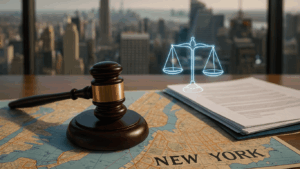
New York arbitration gives businesses, individuals, legal practitioners, and in-house counsel a private alternative to traditional litigation. Instead of presenting a dispute to a judge or jury, parties submit the matter to a neutral arbitrator or panel of arbitrators. The dispute resolution process can involve
Understanding Dispute Resolution Clauses in Contracts
A dispute resolution clause explains how parties will handle conflicts that arise from a contract. Instead of waiting until a disagreement begins, the parties decide in advance whether they will negotiate, mediate, arbitrate, litigate, or follow several of those
The Arbitration Process: A 2024 Step-by-Step Guide
Arbitration, a crucial method in dispute resolution, offers a streamlined alternative to traditional court litigation. This comprehensive guide, presented by Rapid Ruling, delves into the arbitration process step-by-step
Understanding the Role of an Arbitrator in Legal Disputes
An arbitrator is a neutral decision-maker who resolves a dispute outside the traditional courtroom. Instead of presenting the case to a judge or jury, the parties submit their evidence, documents, testimony, and legal arguments to the neutral selected for the
Advantages and Disadvantages of Arbitration
Arbitration is a form of private dispute resolution used to resolve legal and business conflicts outside a formal court process. Instead of presenting the case to a judge or jury, the parties submit evidence, documents, witness testimony, and legal arguments to a
New York arbitration gives businesses, individuals, legal practitioners, and in-house counsel a private alternative to traditional litigation. Instead of presenting a dispute to a judge or jury, parties submit the matter to a neutral arbitrator or panel of arbitrators. The dispute resolution process can involve