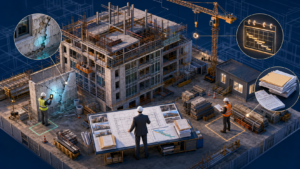
The Benefits of Using Construction Arbitration Services for Dispute Resolution
April 4, 2023
Share Article:
Have Any Question?
Settling disputes with our online arbitration services is easy, fast, and affordable.
We look forward to answering your questions and helping you to reach conflict resolution with our online arbitration service.
Recent Posts

Arbitration is widely used to resolve disputes outside of traditional courtrooms. While it offers speed and confidentiality, parties often wonder if an arbitrator’s award can ever be overturned. Understanding the legal framework, judicial review standards, and practical challenges is essential for anyone

What Happens When One Party Refuses to Participate in Arbitration
Arbitration is often touted as a faster, more efficient alternative to traditional court litigation. Yet, even with a clear arbitration agreement in place, disputes can stall when one party simply refuses to participate. I’ve seen this firsthand working with businesses navigating complex dispute resolution

How Arbitration Awards Are Enforced in State and Federal Courts
Arbitration awards can resolve disputes efficiently, but their enforceability depends on navigating complex federal and state procedures. Whether a business is enforcing a domestic award in a U.S. federal court or an international arbitral award under the New

How Arbitration Handles Contract Breach Disputes
A business owner in Atlanta Georgia once shared that a failed supplier agreement nearly pushed his company into courtroom litigation. The disagreement started as a simple Quality of goods/services issue but escalated into formal court proceedings and

What Is an Arbitration Agreement?
If you’ve ever signed a cell phone contract, started a new job, or signed paperwork for a gym membership in places like Long Island, Manhattan, or Queens, chances are you agreed to something you barely noticed in the fine print: an arbitration agreement. Most
Disputes can arise at any stage of a construction project, and they can be costly and time-consuming if not resolved efficiently. Traditional dispute resolution processes such as court proceedings can be complex, lengthy, and expensive, especially for subcontractors and smaller construction companies. This is why more and more decision-makers in the construction industry are turning to alternative dispute resolution (ADR) methods like arbitration, which is recognized by organizations such as the American Arbitration Association (AAA).
Arbitration can be used for resolving disputes related to complex construction projects, and it can involve depositions and adjudication, just like in court proceedings. However, arbitration offers some distinct benefits, such as lower attorneys’ fees, more flexibility, and the option for binding arbitration.
If you are facing a construction dispute, consider using arbitration as an alternative to traditional court proceedings. With the help of construction mediators and a well-crafted arbitration agreement, you can resolve the dispute in a timely and cost-effective manner.
What is Arbitration and How Does it Work?
Arbitration is a form of ADR that involves appointing a neutral third party, an arbitrator, to adjudicate disputes between parties. In the construction industry, arbitration is often preferred over litigation as it can save time and money, and offers more flexibility in the resolution of disputes.
The arbitration process is typically initiated through an arbitration clause in the construction contract documents. This clause outlines the terms of the arbitration proceedings, including the selection of an arbitrator, the rules of the arbitration, and the timeframes for the process.
Benefits of Construction Arbitration Services
Construction arbitration services offer numerous benefits for dispute resolution. Here are some of the key benefits of arbitration for construction disputes:
Cost-effective
Construction arbitration is often more cost-effective than traditional court proceedings, as there are fewer formalities involved, and the process is typically less time-consuming.
Time-saving
The arbitration process is generally less time-consuming than court proceedings, and the parties involved can agree on the timetable for the arbitration process. This helps to avoid lengthy appeals, and the arbitrator’s decision is usually final and binding.
Flexibility
Arbitration allows the parties involved to choose their arbitrator, the arbitration rules, and the location of the arbitration proceedings. This flexibility allows for a more tailored and efficient dispute resolution process that meets the needs of all parties involved.
Expertise
Arbitrators in construction arbitration services are often experts in construction law, making them well-equipped to understand the legal issues surrounding construction disputes. This expertise can lead to a more informed and fair decision-making process.
Confidentiality
Unlike court proceedings, arbitration proceedings are usually confidential, meaning that the details of the dispute and the arbitration award are not made public. This confidentiality can be beneficial for parties who want to avoid negative publicity or protect their business interests.
Binding Decision
The arbitrator’s decision is usually final and binding, meaning that the parties involved must abide by the decision reached. This finality can help to bring closure to the dispute and allows the parties to move on from the issue.
Arbitration in construction disputes can also involve forms of alternative dispute resolution such as dispute review board (DRB) and facilitator. The Federal Arbitration Act (FAA) governs construction arbitration in the United States, and construction law firms can provide legal advice on arbitration clauses and agreements.
In New York, arbitration is a popular alternative to traditional court proceedings for resolving construction disputes, and it has several benefits such as being more cost-effective and time-saving.
It’s important to note that arbitration has some limitations, and parties may want to include a disclaimer in the arbitration agreement to ensure that the decision reached is fair and reasonable. In addition, the prevailing party in an arbitration may not be entitled to attorneys’ fees, unlike in federal court proceedings.
Conclusion
Construction arbitration services offer a cost-effective, time-saving, and flexible alternative to traditional court proceedings for resolving construction disputes. The expertise of construction arbitrators, the confidentiality of the proceedings, and the finality of the arbitrator’s decision are additional benefits to consider. If you are facing a construction dispute, consider using construction arbitration services to resolve the issue in a timely and efficient manner.
Recent Posts

Arbitration is widely used to resolve disputes outside of traditional courtrooms. While it offers speed and confidentiality, parties often wonder if an arbitrator’s award can ever be overturned. Understanding the legal framework, judicial review standards, and practical challenges is essential for anyone

What Happens When One Party Refuses to Participate in Arbitration
Arbitration is often touted as a faster, more efficient alternative to traditional court litigation. Yet, even with a clear arbitration agreement in place, disputes can stall when one party simply refuses to participate. I’ve seen this firsthand working with businesses navigating complex dispute resolution

How Arbitration Awards Are Enforced in State and Federal Courts
Arbitration awards can resolve disputes efficiently, but their enforceability depends on navigating complex federal and state procedures. Whether a business is enforcing a domestic award in a U.S. federal court or an international arbitral award under the New

How Arbitration Handles Contract Breach Disputes
A business owner in Atlanta Georgia once shared that a failed supplier agreement nearly pushed his company into courtroom litigation. The disagreement started as a simple Quality of goods/services issue but escalated into formal court proceedings and

What Is an Arbitration Agreement?
If you’ve ever signed a cell phone contract, started a new job, or signed paperwork for a gym membership in places like Long Island, Manhattan, or Queens, chances are you agreed to something you barely noticed in the fine print: an arbitration agreement. Most