Rapid Ruling Online Mediation Services
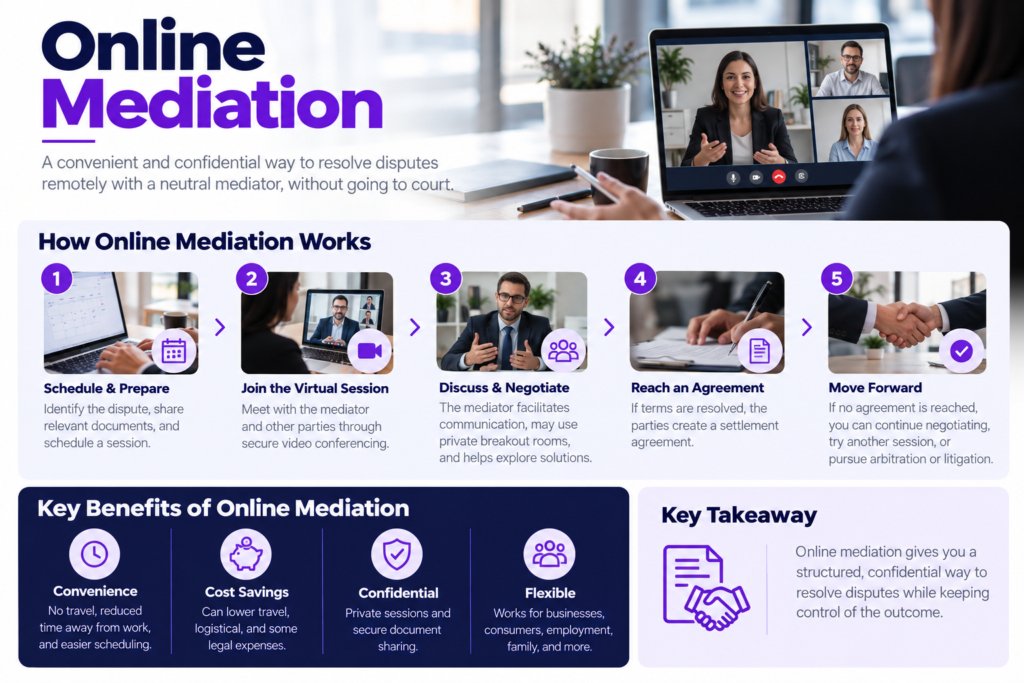
Online mediation is a form of remote dispute resolution in which opposing parties work with a neutral mediator through video conferencing and other digital platforms. Instead of meeting in the same mediation office, participants can join from different locations using a desktop computer, laptop, tablet, or smartphone. The mediator does not decide who wins the dispute. The goal is to improve communication, identify areas of disagreement, explore settlement options, and help the parties reach a voluntary resolution.
Online mediation is part of online dispute resolution, or ODR. It can be used for civil and commercial disputes, workplace disputes, eCommerce disputes, debt and financial claims, property matters, family disputes, insurance and healthcare matters, and other conflicts where negotiation may lead to an agreement. Rapid Ruling provides an online dispute resolution platform that allows individuals and businesses to resolve disputes remotely.
What is Online Mediation?
The mediation process usually starts with case management and scheduling. The parties identify the dispute, provide relevant documents, and select a time for the mediation session. Contracts, photographs, invoices, correspondence, payment records, and other materials may be exchanged through secure online document sharing or confidential file-sharing systems before the meeting.
On the scheduled date, participants join a virtual environment using videoconferencing technology. Zoom mediation is common, although platforms such as Microsoft Teams and other secure video conferencing sites can also support virtual meetings. A synchronous online mediation happens in real time, while some online dispute resolution systems may also use asynchronous communication, secure messaging, or text-based media between sessions.
Many mediations begin with a joint session where the mediator explains the process and gives each side an opportunity to describe the dispute. The American Bar Association notes that remote mediation frequently uses a main virtual room for joint sessions and separate breakout rooms for private caucuses.
What Are the Benefits of Online Mediation?
Convenience is one of the strongest benefits of an online mediation service. Parties do not need to travel to the same city, mediation office, or courthouse. This can reduce travel expenses, scheduling problems, time away from work, and some attorneys’ fees associated with coordinating an in-person meeting. Online mediation may also make it easier to involve attorneys, insurers, business decision-makers, or other participants who live in different locations.
The Program on Negotiation at Harvard Law School notes that online mediation can offer convenience, time savings, and cost savings, particularly when parties are geographically separated. It can also be useful when a dispute began through an online transaction or when a participant is uncomfortable meeting the other party face to face.
The virtual format can also support a confidential forum. Participants can enter separate breakout rooms, share documents digitally, and return to a joint session when needed. Some ADR platforms may also support tools such as screen sharing, electronic signatures, chat functions, or real-time translation.
Online mediation can also work alongside other dispute resolution methods. A matter may begin with negotiation, continue through mediation, and move to arbitration or litigation if no settlement is reached. In some cases, courts may issue a court order requiring parties to participate in mediation even though the mediator cannot force them to accept a settlement.
How It Works
apid Ruling is an online dispute resolution platform. We offer parties to resolve a dispute in weeks instead of months or years with traditional courts and are 100% online. We resolve your dispute by having a professional Arbitrator hear both parties, review their evidence, and render a decision.

- Submit Your Case
Gather your documents, photos, videos, and other evidence. Upload the files to our secure server, describe your claim, and identify the responding party.

- Online Mediation Hearing
The hearing will either be a live phone call or a video hearing. Your Arbitrator will first ask both sides to tell their story. Then the Arbitrator will ask detailed questions to both parties based on the statements and evidence.

- Decision
Your Mediator will issue a decision within weeks of filing a claim, not years. This decision is legally binding and enforceable.
How Long Does Online Mediation Take?
It is hard to quantify the amount of time online mediation takes since no two cases are identical. However, the process is faster than litigation.
Ideally, online mediation involves a few sessions scheduled according to the participating parties’ convenience. The process begins with a short session that takes roughly half an hour, whereby the participants are sensitized to the mediation process.
At the end of the session, the mediator and the parties schedule subsequent sessions to hear the matter at hand.
In most cases, online mediation takes around three 2-hour sessions. Therefore, the process could take about one to three months before a verdict. Nonetheless, it could take longer, depending on the issue in contention.
How Should You Prepare for a Virtual Mediation Session?
Preparation should include both the dispute and the technology. Start by gathering the documents that explain your position, including contracts, emails, photographs, invoices, estimates, payment records, and other relevant information. Organize the files in advance so you are not searching through your computer while the mediation session is underway.
Think about your goals before entering the meeting. Identify the outcome you would prefer, the issues where you may be willing to compromise, and what may happen if the parties do not reach an agreement. Good conflict management depends on understanding both your own priorities and the likely concerns of the other side.
Technology should be tested before the session. Check your WiFi signal, camera, microphone, speakers, and video platform. Technology glitches can interrupt negotiations and make an already difficult conversation more frustrating. Participants should also choose a private room where other people cannot overhear the discussion.
Avoid recording the session, forwarding confidential documents, or allowing unauthorized people to remain in the room without approval. The mediator should also explain how documents, breakout rooms, and private communications will be handled before substantive negotiations begin.
Online Dispute Resolution is a type of alternative dispute resolution in which people with a dispute communicate online to resolve a conflict. With ODR, individuals have the power to develop solutions that meet the expectations and needs of both parties using new technologies.
ODR services range from online arbitration to fully automated arbitration proceedings, helping a wide range of service providers and making its functionality outstanding. The preference for the appropriate ODR platform depends on the nature of the conflict and the parties involved. ODR procedures should also be convenient for the parties and not be of accessibility concerns with the use of technology.
Why Choose Rapid Ruling?
Convenience. Taking your dispute to court, you’ll have to take time off work or step away from your business or family to drive down to the court, wait for your case to be called, dispute your claim, and go back. If you want to get a witness to join you, they’ll face the same bothers. With Rapid Ruling, our Hearings are short and online practice from wherever you or your witness might be.
Rapid Results. You can get a decision in as little as weeks from the date both parties agree to use our service. The court can take months or years, if not longer!
Comfort. You don’t have to learn the rules of court or get in front of a crowded courtroom. Our Arbitrators are highly qualified and unbiased but not intimidating.
Quality. RapidRuling’s assigned Arbitrators review all claims thoroughly and spend the time necessary for them to rule on the claim.
What Happens After an Online Mediation Session?
If the parties reach an agreement, the terms are usually written into a settlement agreement or similar document. Depending on the type of dispute and applicable law, the agreement may become an enforceable contract once properly signed. The mediator may help clarify the terms, but the settlement comes from the parties themselves rather than from a ruling imposed by the mediator.
If the parties reach only a partial settlement, they may resolve some issues and continue negotiating the remaining ones. They may also schedule another mediation session. Hybrid hearings or follow-up meetings can sometimes combine virtual and in-person participation when the parties need additional flexibility.
If no agreement is reached, the mediation ends without a settlement. The parties may continue negotiations independently, pursue arbitration, or move forward with litigation when appropriate. This is one of the most important differences between mediation and arbitration. A mediator facilitates conflict resolution, while an arbitrator generally evaluates evidence and issues a decision.
Is Online Mediation Right for Your Dispute?
Online mediation can work well when the parties want a structured negotiation process but do not need to meet in person. Commercial disputes, workplace and employment issues, family and property matters, monetary claims, consumer disputes, eCommerce disagreements, and other civil cases may all be suitable depending on the circumstances.
The process may be less suitable when severe technology limitations prevent meaningful participation, when a party cannot safely negotiate, when emergency court relief is required, or when the parties have no interest in settlement. Online mediation also depends on reliable internet access and comfort using digital tools. A weak WiFi signal, poor audio, or repeated connection failures can interfere with communication.
The format should therefore match the needs of the dispute. Rapid Ruling uses online mediation and other ADR processes to give parties an alternative to traditional court proceedings. By combining neutral facilitation, video conferencing, online document sharing, and remote case management, online mediation can provide a practical way to resolve conflicts while allowing the parties to retain control over whether a settlement is reached.



We Quickly Decide Disputes With Ease
Resolve your dispute with RapidRuling in 4 easy steps!
Begin your online arbitration or mediation by visiting our eFile Portal, where you can submit your case.
The opposing party will receive notice from Rapid Ruling of the claim and shall respond within the time period, if any, specified.
The assigned Arbitrator will review the submissions and proceed to review the claim based on the Rules.
Your Arbitrator will issue an award within weeks of filing a claim, not years. This decision is legally binding and enforceable.