





A landlord near downtown Los Angeles once told me he was fully prepared to file in Small Claims Court over unpaid security deposits. He had his paperwork ready for County Court and expected months of hearings. Instead, after one session with a neutral mediator, both sides reached an agreement that afternoon. That is the real value of professional Mediation Services. They create a structured, confidential process where disputing parties resolve conflict without escalating Court Cases.
Understanding Mediation Services and Conflict Resolution
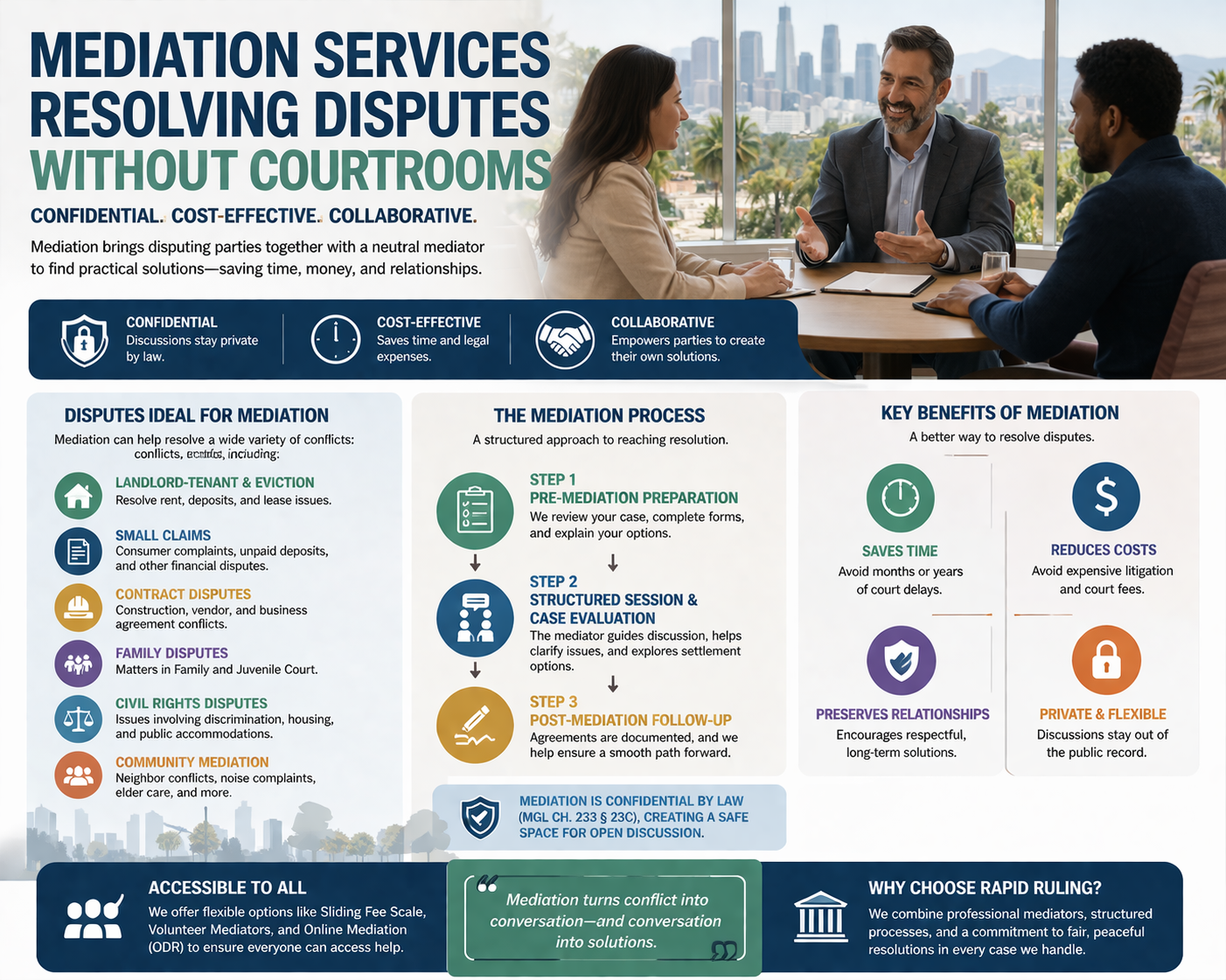
Mediation Services are a practical form of dispute resolution designed to address communication breakdowns before they turn into prolonged litigation. A neutral mediator facilitates conversation in a neutral setting, helping parties explore settlement options while managing client expectations.
Courts increasingly support this approach. The California Courts system promotes Alternative Dispute Resolution through its ADR programs, encouraging early resolution to reduce case management delays. Confidentiality protections such as MGL Ch. 233 § 23C reinforce that mediation discussions remain private, strengthening trust throughout the process.
Types of Disputes Appropriate for Mediation
Rapid Ruling handles a wide range of matters, including:
- Small Claims disputes involving consumer complaints or security deposits
- Landlord Tenant and Eviction Mediation matters
- Contract disputes related to construction projects
- Family disputes addressed within Family and Juvenile divisions
- Civil rights disputes guided by the California Civil Rights Department
Community Mediation can also address neighborhood noise complaints, elder care disagreements, and other community conflicts. Organizations like the National Association for Community Mediation recognize these programs as effective tools for maintaining peaceful relations.
How the Mediation Process Works
STEP 1: Pre-Mediation Preparation
We begin with pre-mediation calls, confirm the case number, review mediation forms, and explain procedural options. Clear preparation improves user experience and reduces unnecessary tension.
Structured Session and Case Evaluation
During mediation, the neutral mediator guides structured discussion and may conduct limited case evaluation to clarify risks and settlement options. Many professional mediators follow frameworks similar to the JAMS Rules & Procedures to ensure consistency and fairness.
Post-Mediation Follow-Up
Once an agreement is reached, terms are documented clearly. Post-mediation follow-up ensures compliance and addresses questions about internal appeal rights or voluntary procedural changes involving a public body.
Cost-Effective Resolution and Accessibility
Mediation is widely recognized as a cost-Effective Resolution compared to traditional litigation. Military OneSource highlights that mediation often saves time and preserves working relationships. Many Community Mediation programs offer Sliding Fee Scale options, Volunteer Mediators, and ODR mediator services to increase accessibility.
How It Works
Rapid Ruling is an online dispute resolution platform. We offer parties the ability to resolve a dispute in weeks instead of months or years with traditional state courts and are 100% online. We resolve your dispute by having a professional Arbitrator hear both parties, review their evidence, and render a decision.
- Submit Your Case
Gather your documents, photos, videos, and other evidence. Upload the files to our secure server, describe your claim, and identify the responding party.
- Online Arbitration Hearing
The hearing will either be a live phone call or a video hearing. Your Arbitrator will first ask both sides to tell their story. Then the Arbitrator will ask detailed questions to both parties based on the statements and evidence.
- Decision
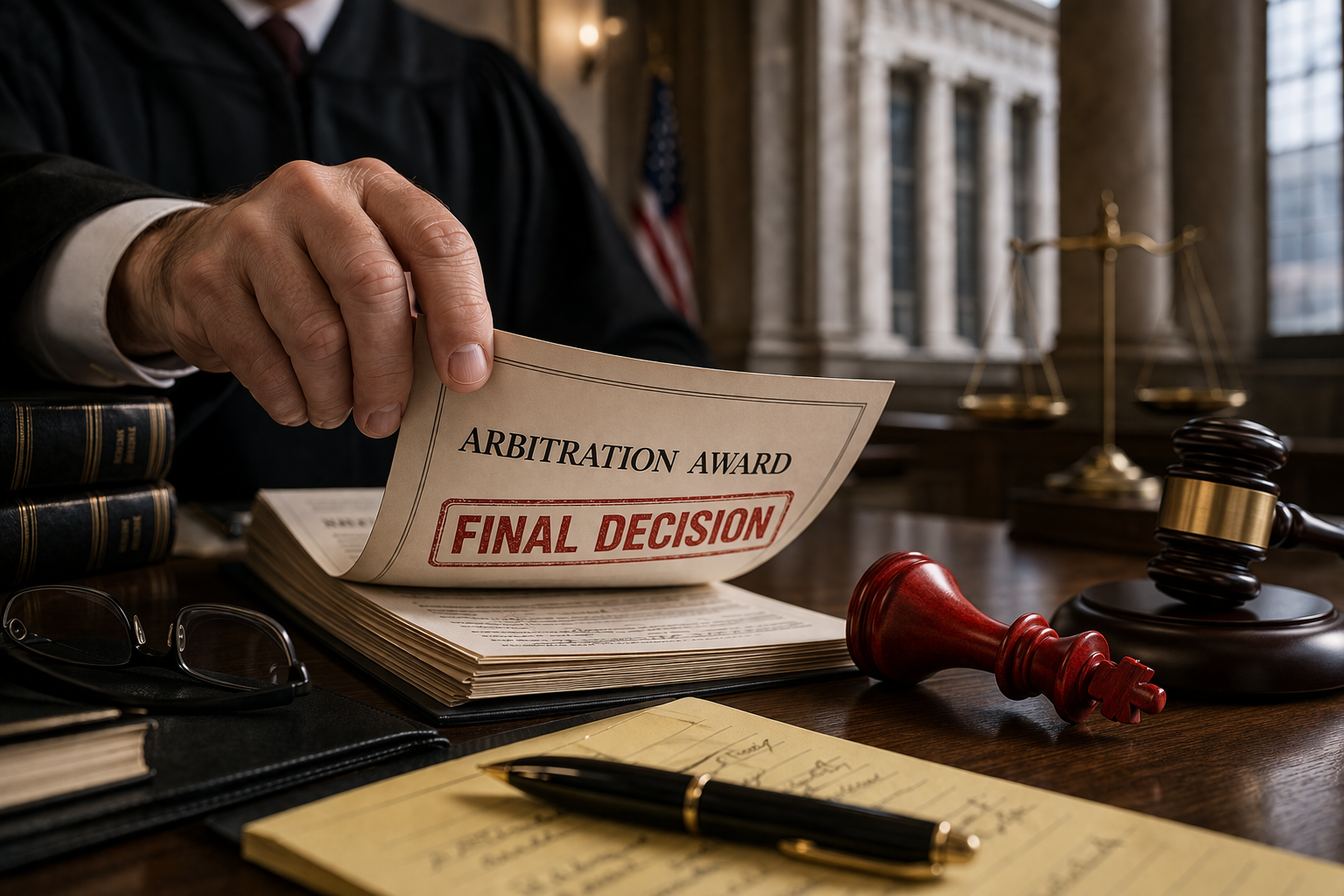
Your Arbitrator will issue a decision within weeks of filing a claim, not years. This decision is legally binding and enforceable.
Business disputes and B2B claims
- Vendor and supplier disputes
- Contract performance disagreements
- Payment conflicts
Construction projects
- Contractor and subcontractor disputes
- Scope and timeline disagreements
- Project performance conflicts
Employment contracts
- Contract interpretation disputes
- Compensation disagreements
Intellectual property disputes
- Licensing conflicts
- Ownership disputes related to contractual agreements
Why Choose Rapid Ruling?
Convenience. Taking your dispute to court, you’ll have to take time off work or step away from your business or family to drive down to the court, wait for your case to be called, dispute your claim, and go back. If you want to get a witness to join you, they’ll face the same bothers. With Rapid Ruling, our Hearings are short and online web-based from wherever you or your witness might be.
Rapid Results. You can get a decision in as little as weeks from the date both parties agree to use our service. The court can take months or years, if not longer!
Comfort. You don’t have to learn the rules of court or get in front of a crowded courtroom. Our Arbitrators are highly qualified and unbiased but not intimidating
Quality. RapidRuling’s assigned Arbitrators review all claims thoroughly and spend the time necessary for them to rule on the claim.
At Rapid Ruling, our focus is structured communication, efficient case management, and guiding disputing parties toward resolution in a peaceful manner. Whether the matter involves Small Claims, contract disputes, healthcare providers, or civil rights disputes, our Mediation Services prioritize clarity, confidentiality, and practical solutions.
If you are facing a dispute and want to resolve it without prolonged litigation, mediation offers a professional, confidential path forward.
Frequently Asked Questions
What is mediation?
What types of disputes can mediation resolve?
Is mediation legally binding?
How long does the mediation process take?
Is mediation confidential?
Do I need a lawyer during mediation?
Alternative Dispute Resolution Blog
Read about alternative dispute resolution and how our online arbitration platform works.

Can arbitration be overturned
Arbitration is widely used to resolve disputes outside of traditional courtrooms. While it offers speed and confidentiality, parties often wonder if an arbitrator’s award can ever be overturned. Understanding the legal framework, judicial review standards, and practical challenges is essential for anyone
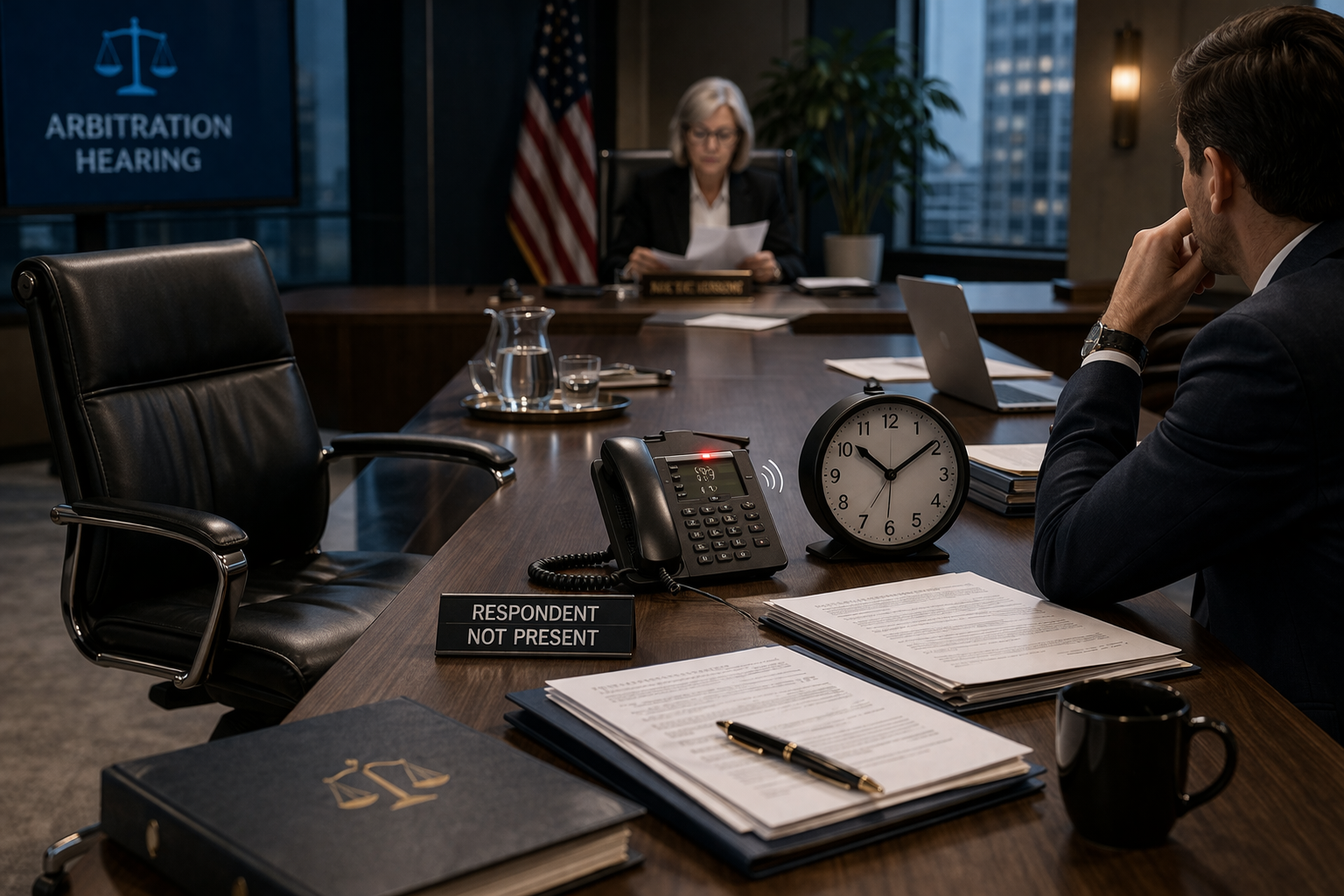
What Happens When One Party Refuses to Participate in Arbitration
Arbitration is often touted as a faster, more efficient alternative to traditional court litigation. Yet, even with a clear arbitration agreement in place, disputes can stall when one party simply refuses to participate. I’ve seen this firsthand working with businesses navigating complex dispute resolution

How Arbitration Awards Are Enforced in State and Federal Courts
Arbitration awards can resolve disputes efficiently, but their enforceability depends on navigating complex federal and state procedures. Whether a business is enforcing a domestic award in a U.S. federal court or an international arbitral award under the New

We Quickly Decide Disputes With Ease
Resolve your dispute with RapidRuling in 4 easy steps!
Begin your online arbitration or mediation, by visiting our eFile Portal, where you can submit your case.
The opposing party will receive notice from Rapid Ruling of the claim and shall respond within the time period, if any, specified.
The assigned Arbitrator will review the submissions and proceed to review the claim based on the Rules.
Your Arbitrator will issue an award within weeks of filing a claim, not years. This decision is legally binding and enforceable.